News

Miss Nancy Sherrard: Lakeport Tutor
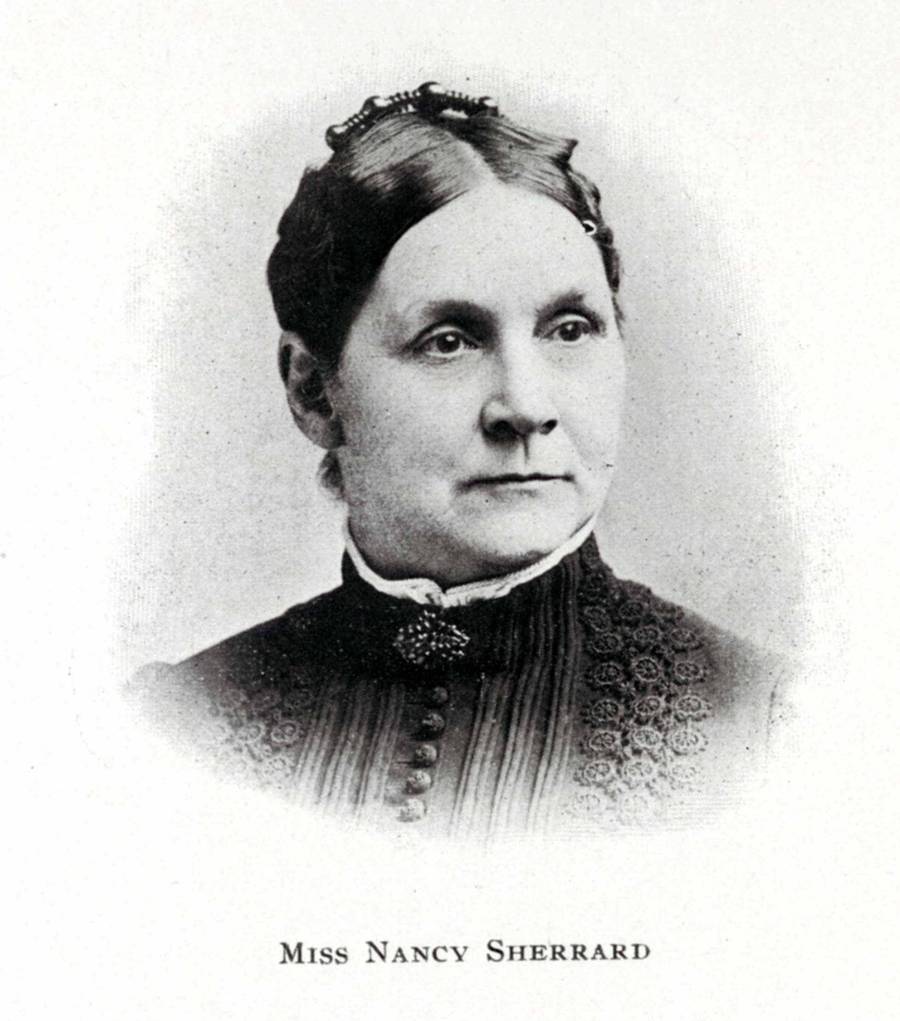


Image Courtesy of Archives and Special Collections, U. Grant Miller Library, Washington and Jefferson College, Washington, PA

One of the few glimpses of life at Lakeport during the antebellum period comes from the “autobiography” of Nancy Sherrard, the private tutor for the Johnson’s children between the summer of 1860 and the spring of 1861. Sherrard, a native of the prosperous Ohio River town of Steubenville, Ohio, wrote a short autobiography around 1890 as she was nearing the end of her teaching career.1 In reference to Lakeport, she tells a few details about the Johnson family and slavery not recorded elsewhere. However, most importantly, it reveals the strain of a Northern woman living and working in the Deep South as the country descended into civil war.

Published in 1890 as part of The Sherrard Family of Steubenville, written by Nancy’s father, Robert Andrew Sherrard, and edited by her brother Thomas Johnson Sherrard. The book is long been known to historians, but can now be read more widely through Google Books and the Internet Archive.

Nancy Sherrard graduated from the Steubenville Female Seminary in 1851. In the summer of 1860, following a number of teaching engagements at schools in Ohio, Pennsylvania, and Kentucky, she was recommended to “Mr. Lycurgus Johnson, a wealthy planter of Lake Port, Arkansas, who wished a private instructor for his children.” Accompanying the 30 year old Miss Sherrard was Miss Martha Torrance of New Alexandria, Pennsylvania. Miss Torrance taught two children at the home of Verlinda Johnson, Lycurgus’ mother, who lived about a mile away, while Miss Sherrard taught three girls and one boy in the Lakeport home.2

At the Lakeport Plantation, Miss Sherrard reported, “there were one hundred and fifty slaves” raising “twelve hundred acres of cotton and three hundred acres of corn.” Inside the home, Sherrard noted: “in the family of Mr. Johnson there were seven or eight house-servants,” including “a well-trained dining-room servant” purchased the year before with his wife and child for $3,000.3

As the summer of 1860 turned to fall, the U.S. presidential election became the flashpoint for tension between the Republican North and the Democratic South. In November 1860, antislavery Republican candidate, Abraham Lincoln, was elected president infuriating the Democratic slave South. From December 1860 to February 1861, led by South Carolina, seven southern states left the Union to form the Confederate States of America. Arkansas, Virginia, North Carolina, and Tennessee would remain in the Union for now.

Miss Sherrard’s political upbringing could not have been more different from the Johnsons. Her family was made up of die-hard Northern Republicans, while the Johnsons’ were Southern Democrats with deep political roots in Virginia, Kentucky, and now Arkansas.4 The country’s political differences and those between her and her employer led Miss Sherrard to think of leaving Lakeport. She wrote to her father on Saturday, February 16, 1861, stating, “I am meditating seriously on going home, for I do not feel satisfied to say here in the present state of the country. I do not know yet how soon, but indeed I begin to feel uncomfortable.” Miss Sherrard wrote, “People down here are strong disuionists, and blame everybody else differing from them even in slight matters.” She then described a dinner conversation in which Mr. Johnson said to her “Miss Sherrard, there are a great many good people in the South.” To which she curtly replied, “Yes…and it is a pity that they let the rascals lead them.” Later, she worried, “Now, I suppose the next thing they will think I am an Abolitionist…I suppose Mr. Johnson will think I went beyond my sphere, which is to teach his children, and not to talk politics with him, which is undoubtedly true. I wish I was at home, where I could talk without people getting angry about what I say.”5

Following Lincoln’s election, the country’s unfolding drama focused on Fort Sumter at the bay entrance to Charleston, South Carolina. Federal troops, holed up inside Fort Sumter since December 26, were attacked by Confederate forces on April 12 as the Federal troops awaited new supplies. The Civil War had begun and Confederate forces won their first battle on April 14, when the Federal troops at Fort Sumter surrendered.6

After the fall of Fort Sumter, Nancy Sherrard left Lakeport on a “Southern boat.” It stopped in Memphis after hearing Federal troops were at Cairo, Illinois. She continued her journey on the Queen of the West, a “Northern boat” bound for Cincinnati. At Randolph, Tennessee, the “Northern boat” was fired upon by “rebels.” Finally, at Cairo, Illinois, she saw the United States flag for the first time on the trip. On Tuesday, April 30, 1861, she arrived back in Steubenville, Ohio. Six days later, on May 6, Arkansas delegates to the special convention voted to secede from the Union.7

In 1874 Miss Nancy Sherrard, after a few years of teaching in Kentucky Indiana, and New York, was elected as Principal at Washington Female Seminary in Washington, Pennsylvania. She stayed in that position until in 1897. A notice of her retirement stated, Miss Sherrard “kept the school in the front rank of schools of its kind, as well as making it a financial success.”8 In 1890, Miss Sherrard reflected on her time at Lakeport and wrote, “I have always been glad that I saw the South in the days of slavery, and also had the opportunity of seeing the inside workings of Secession during that winter.”9 She died in April 1914.10


1. On Steubenville, see “Steubenville, Ohio”, Ohio History Central, July 1, 2005, http://www.ohiohistorycentral.org/entry.php?rec=804

2. Nancy Sherrard quoted in Robert Andrew Sherrard, The Sherrard Family of Steubenville, Thomas Johnson Sherrard, ed. (James. B. Rodgers Printing Co: Philadelphia, 1890), 287. Martha likely taught 15 year old Robert Adams and 13 year old Linnie Adams; Robert and Linnie were the offspring of Nancy Johnson Adams, Lycurgus’ sister. Nancy likely taught Mary, Linnie, Theodore, and Annie, ages 11, 9, 7, and 5 respectively. See U.S. Census, Manuscript Returns. 1860. Schedule of Population, Louisiana Township, Chicot County, Arkansas; Crop creek Township, Jefferson County, Ohio.


4. Her father, Robert Sr., a native of Ireland, was described as a “lifelong Whig and a Republican from the day of the organization of that party.” He “voted for Abraham Lincoln and warmly endorsed his policy” and “[w]hen the War of the Rebellion broke out” he “remained a strong supporter of the Union.” Her brother, Robert Jr., served in the Ohio State Senate in 1861 as a Republican and in his 1895 obituary, he was described as a “staunch Republican, loyal to the party at every crisis.” See Thomas Johnson Sherrard in The Sherrard Family of Steubenville, 302. On Robert Sr.’s Irish nativity, see “’Death Loves a Shining Mark.’ Hon. Robert Sherrard, Jr., Passes Peacefully away this Morning,” Steubenville Daily Herald, November 15, 1895. The most prominent politician in the Johnson family was Lycurgus’ uncle, Richard Mentor Johnson, who served as Vice President from 1837-1841 under President Martin Van Buren. Three of Richard Johnson’s brothers served in the U.S. House of Representatives and another, Benjamin Johnson, became a territorial and then federal district judge in Arkansas. See DeBlack, “’A Model Man of Chicot County’: Lycurgus Johnson and Social Change,” in The Southern Elite and Social Change: Essays in Honor of Willard B. Gatewood Jr. (Fayetteville: University of Arkansas Press, 2002), 16-17, 19.


Need a Bridge?

Proposals for the Old Greenville Bridge are now being accepted.

http://www2.arkansasonline.com/news/2009/jul/15/old-greenville-bridge-offered-relocation/


Closed Monday, July 6, 2009

Lakeport will be closed Monday, July 6, 2009. We will resume regular business hours Tuesday, July 7, 2009.


Lakeport Plantation to host African American heritage reunion celebration July 3-5

For Release to the News Media:
June 22, 2009

Media Note: View this release online at http://asunews.astate.edu/AfAmHeritageCelLakeport09.htm.

ASU – Jonesboro: Lakeport Plantation to host African American heritage reunion celebration July 3-5

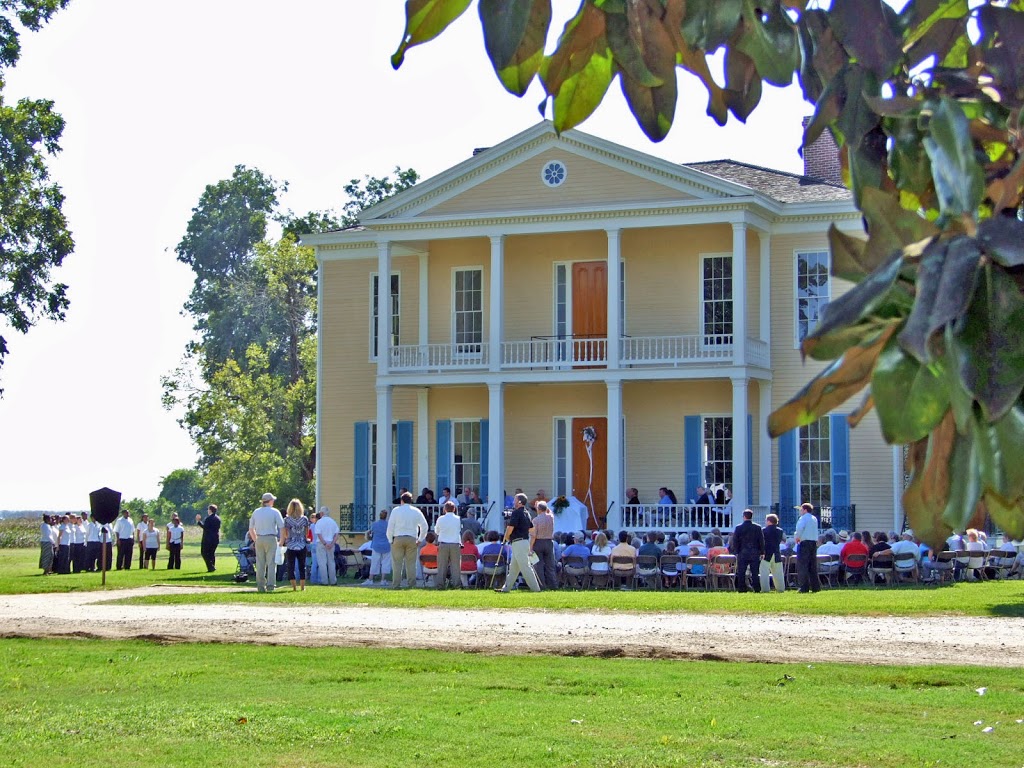
Lakeport Plantation will host an African American heritage reunion celebration Friday-Sunday, July 3-5, at Lakeport Plantation, Lake Village, Ark. The event is sponsored by the Lakeport Cemetery Preservation Project, Inc. and ASU-Jonesboro. Activities will begin with a registration and meet-and-greet at the Mt. Pleasant Church cafeteria from 5-7 p.m. on Friday, June 3. The reunion celebration encompasses Lakeport, Ford, Redleaf, and other surrounding communities.

Saturday, July 4, begins with registration, an old-time breakfast and a presentation, “African American Food Folkways” at 6-8 a.m.; a welcome panel including a history of Lakeport Plantation and talks on restoration, research, and African American research projects from 8-9 a.m.; a presentation on the importance of African American history and heritage from 9-9:30 a.m., and a presentation on African American quilting ending at 10 a.m. A presentation on old-time health remedies runs from 10-10:30 a.m., and from 11:30 a.m.-12 noon, “Story Telling from the Elders” will be featured. The Craig Lacy 4th of July picnic will be held from 12 noon-1:30 p.m. and will include an awards ceremony and a cemetery committee update. Tours of three local cemeteries (Old Lakeport, Lakeport, and Morning Star/Ford), churches (Mt. Pleasant and Morning

Star), and “the Big House” will take place from 1:30-4 p.m. At 5:30-7:30 p.m., African American music and celebrations will be featured, including God’s Network, a Jump the Broom wedding ceremony, and a combination fireworks show, reception, and party.

Sunday, July 5, will feature a sunrise church service and closing ceremonies from 7:30-8:30 a.m., and a continental breakfast at 8:30-9:30 a.m.

Alice Rogers-Johnson, president of the Lakeport Cemetery Committee, notes, “The past is all around us. We live our lives against a rich backdrop formed by historic buildings such as the Lycurgus Johnson Lakeport Plantation house, the landscapes and other physical survivals of our past, such as the cotton fields, fishing holes, juke joints, churches, cemeteries, and other significant landmarks. Historic landscapes or iconic buildings can become a focus of community identity and pride. Building materials and artifacts can define a region’s localities and communities. However, our African American history and heritage and lifestyle on Lakeport is more than just a matter of material remains. It is central to how we see ourselves as individuals, communities, and as citizens…on a more personal level, it is a testament to the people who lived, worked, and died here.”

Aketa Guillory, a Heritage Studies PhD student at ASU-Jonesboro, agrees. Guillory says, “I have been working on the African American experience in the sharecropping and tenant farming systems on Lakeport Planation, which included interviewing those who migrated to the north. Also, I have also been working with African American community members near Lakeport to preserve their three historic cemeteries, which eventually led to the development of the Lakeport Cemetery Preservation Project, Inc., and the Lakeport Cemetery Committee. The Lakeport African American heritage celebration is a sort of community catalyst to promote preservation of African American history and heritage. With this in mind, my dissertation focuses on the African American experience on Lakeport Plantation from 1927-1972.”

For more information, contact Aketa Guillory, (870) 273-6589, visit the website Memories of Lakeport, see or print a copy of the Lakeport heritage celebration brochure, or view a map of Lakeport and its environs. In Lake Village, contact Alice Rogers-Johnson, (870) 918-0139. Lakeport Plantation is an Arkansas State University Heritage SITE. Visit the Lakeport Plantation blogspot (http://lakeportplantation.blogspot.com/2009/05/lakeport-cemetery-preservation.html) for information and photographs.


Memorial Day Observance

Lakeport will be closed Monday, May 25, 2009 for Memorial Day. Normal operating hours will resume on Tuesday, May 26, 2009.


The Lakeport Cemetery Preservation Committee Hosts Website

The Lakeport Cemetery Preservation Committee has created a website–Memories of Lakeport African American Memorial. The site was established “to share and carry on our families’ legacy in Lakeport, Arkansas…[from the] perspectives of the descendants of the former enslaved, sharecroppers, tenant farmers, and wageworkers who lived and labored on Lakeport Plantation, Ford Plantation, and Red Leaf Plantation.”

There are three African American cemeteries near the Lakeport Plantation home: Old Lakeport Cemtery, Lakeport Cemetery (Middle of the Field Cemetery or Blackwater Rd Cemetery), and Ford Cemetery (Morning Star Missionary Baptist Cemetery). Old Lakeport and Ford cemeteries date to before Emancipation and Lakeport Cemetery dates to ca 1898. The two pre-Emancipation cemeteries are beleived to have been used by other nearby plantations–Red Leaf and Ford.

Lakeport Cemetery started as a family plot of the Lacy family and soon became a new burial ground for sharecroppers and tenant farmers around Lakeport. The Lakeport Cemetery Preservation Committee spent several days in September 2008 clearing and cleaning the plot. Their efforts resulted with the 2009 Boot Strap Award from the Delta Byways Association.


Ribbon Cutting a Success!


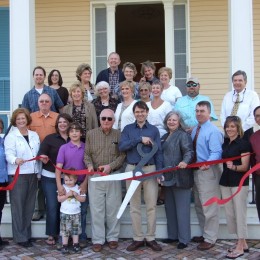
A crowd of supporters came to Lakport last night to honor Lakeport’s membership in the Lake Village Chamber of Commerce.  The chamber and its executive director, Lisa Raby, works hard to support business and tourism in Lake Village–“One of the Delta’s best kept secrets.”  We know Lakeport benefits from their support.

The event was a great success: O’dourves were served on the front porch and beverages were served on the north side porch; a crowd of well-wishers gathered to support Lakeport (and eat); and, most importantly, the scissors cut the ribbon with the greatest of ease.
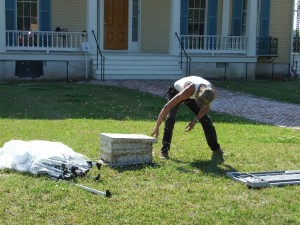
Even though the evening was a success, a swarm of bees in the early afternoon plotted to sabotage the event.  Lucky for us, registered beekeeper, John C. Hatfield, was able to come from Star City to remove swarm.  The bees were gone by 4:45–just in time to finish setting up.  


After Hours at Lakeport


Event Alert!

April 16, 2009 After Hours at Lakeport Plantation Please join us for a Business After Hours and honorary ribbon cutting at the beautiful Lakeport Plantation on Thursday, April 16th. From 5:30 to 7:30 p.m. Mingle under the magnolia trees with fellow business owners, friends and family, enjoy a wine and cheese bar and take a leisurely tour of this magnificent and historic home. Tickets are $8 per person. For more info contact: L. Raby at the Lake Village Chamber of Commerce 870-265-5997


Visitor to Lakeport blogs about visit

A recent visitor to Lakeport, Lonnie Strange,  blogged about her second visit to Lakeport

http://lonniestrange.blogspot.com/2009/03/lakeport-plantation-lake-village.html

Lonnie is also a Fan of Lakport Plantation on Facebook.  Click here to view the Lakeport Fan Page, then click on “Become a Fan.”


Lake Village, February 1860

Public historian Shirley Schuette shared an interesting link today on pre-Civil War Lake Village and Chicot County. Vicki Betts, a professional librarian at the University of Texas at Tyler, compiles and transcribes newspaper articles from the Civil War era.  One of her transcriptions from the Old-Line Democrat (Little Rock) contains an excellent article on Lake Village:   
 
[LITTLE ROCK] OLD-LINE DEMOCRAT, February 2, 1860, p. 1, c. 6
                                                                Lake Village, Jan. 9th, 1860.
Dear Old-Line.—Thinking that perhaps amid the din of political strife, a letter from the quiet and secluded little town of Lake Village, would operate as a balm to your weary soul, by again calling to remembrance those scenes of quietude remote from the bustle and confusion of this babbling world, and so seldom experienced in the life of an Editor.  I take my pen to jot down a few items of news from this beautiful place to solace you.  Know then that Lake Village is a pretty little town, situate on the banks of one of the most beautiful little lakes of the South.  It is the county seat of Chicot county, and is seven miles from the Mississippi river.  The surrounding country is one of the most fertile spots in the Mississippi valley, and rivals in richness the far famed Delta of the Nile.  The shores of Old River Lake are covered with magnificent plantations which are cultivated with great care, and the yield of cotton is almost fabulous.  The health of this country is reasonably good.
The town is small but improving very fast.  This appears to be one of the places where Lawyers “most do congregate” as there are a great many of them here, but as for the other learned professions, they are thinly represented.  The public buildings are all excellent, and especially the Jail, which is undoubtedly the best in the State—these public buildings are sure evidences of enterprise and public spirit.  The towns and surrounding country are very much in need of mechanics, and a good saddler, shoemaker, or tailor, could do better here than almost any where else, provided however, that he be a sober and industrious man.  Mechanics of other trades also can find plenty of work at high wages and ready pay.  I know of no place where mechanics can do better than here.  There will be a newspaper published here in a few weeks, which I take to be another proof of the prosperity and enterprise of the country.
Dr. Lyon has been here “feeling the public pulse,” for his prospects for Congress from this district.  He made a speech at the Court House the other night and defined his position to his audience.  He says that he is not an Old-Line Democrat—is in favor of re-opening the African slave trade, &c., &c.
The political atmosphere is quiescent at present, in fact the people are too busily engaged in their own private affairs to attend much to politics.  Your valuable paper has various subscribers here, and is very well liked.  Your moderate, yet firm course is entitled to the respect of all thinking men.  A project is on foot here to establish a Female College at Lake Village, with an endowment of $50,000, a considerable of which is now subscribed, and the day is not far distant, I trust, when Lake Village will be the site of one of the most magnificent and interesting female colleges in the South.  This place is one of the most beautiful and healthy in the world, and is of easy access, no school of like character is near, and it is due the enterprise of old Chicot that she should have one first class school within her limits.  The Chicot levy board are pushing on their works with great rapidity, and seem determined that the Mississippi shall never again visit the plantations of Chicot county.  The levys are built far back from the river, and are very large and substantial.
There has been some very cold weather for this country here this winter and no little know, but the weather is now warm and rainy.  The Post Office at Luna will soon be changed back to Columbia again, from whence it was removed to Luna last fall.
The planters have got their cotton crop nearly gathered, and a fine one it was too.  The planters of this county appear to have fine success in growing cotton, and their plantations are models of neatness and good farming.
                                                            Peregrine. 
 
Visit Vicki Betts’ page here and see the other transcribed articles from Old-Line Democrat here