News

Belmont Plantation House: Some Facts
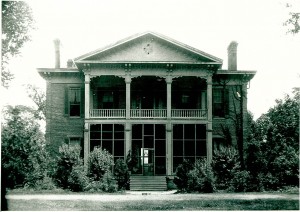
Belmont LOC

1936 HABS Photograph, Library of Congress

When cotton prices rose in the 1850s, Delta planters like the Worthingtons and Johnsons built mansions like Belmont, Mount Holly, Willoughby and the Lakeport Plantation. While we have lost Leota (1883), Willoughby (1932) and Mount Holly (2015), Belmont and Lakeport still stand. Lakeport is restored and owned by Arkansas State University; and Belmont has new owners with grand plans for the 1857 home.  Below are a few  facts about the Belmont Plantation.
    • Belmont was built around 1857 for Dr. William W. Worthington (1802-1886) and Elizabeth (Stringer) Worthington along American Bend on the Mississippi River. The next year that bend would become Lake Lee.
    • Belmont’s name may have been derived from Belle Island, the island plantation surrounded by American Bend (later Lake Lee) and the Mississippi River. Belle Island was owned by Judge Benjamin Johnson was a native Kentuckian who became one of Arkansas’s Territorial judges in 1821.
    • The dominant architecture of the house is Greek Revival. However, Italianate brackets along the cornice and pediment show architectural tastes were in transition.
    • Belmont and Lakeport both feature double galleried, three-bay projecting porticos.

  • Belmont has some of the finest plaster work in Mississippi.
  • The entry medallion at Belmont is nearly identical to the the medallion at Lakeport.
  • William Worthington was one of four brothers from Muhlenberg County, Kentucky who settled in the Delta (AR & MS) in the 1820s and 1830s.
  • The land on which Belmont was constructed was originally owned by Alexander G. McNutt, who served as Mississippi Governor from 1838-1842. The land was later purchased by William’s brother, Samuel Worthington. William purchased the land from his brother in 1855 and then constructed Belmont around 1857.
  • Samuel Worthington built the Willoughby (Wayside) Plantation to the southwest of Belmont in 1858. Samuel’s daughter, Amanda Worthington, penned her diary there during the Civil War.
  • There is strong evidence that the same builders from Madison, Indiana constructed Belmont (1857), Willoughby (1858), and Lakeport (1859). The same evidence suggests the builders also built a home at Leota (likely for Isaac Worthington’s widow) and another at Grand Lake, Chicot County, Arkansas.
  • Samuel’s Willoughby Plantation home, then vacant, was razed in 1932 for the expansion of the levee. Samuel’s son estimated it cost $35,000 to build and furnish the Willoughby home.
  • Isaac Worthington and his wife, Anne Taylor Worthington, settled at Leota. The Leota home fell into the Mississippi river in 1883. Anne was the sister of Lydia Taylor Johnson at Lakeport.
  • Anne Taylor Worthington’s house at Leota was, according to a 1936 newspaper article, “a handsome two-story brick home facing the river [built] exactly like Belmont except that it had two wings whereas Belmont has only one.”
  • Elisha Worthington, who settled in Chicot County, was the largest planter in Arkansas. His prized Sunnyside Plantation also had a large home. One newspaper report described it as “magnificent,” but little else is known about it.
  • The 1860 Census for Washington County is missing (as are the county’s 1850s tax records), however in 1855 William Worthington owned 80 enslaved laborers. His holdings most likely increased during the next six years until the Civil War began.
  • During the Civil War, from 1863-1865, supply rich plantations like Belmont were often raided by troops to feed and supply the Union Army operating in the Lower Mississippi Valley.
  • North of Belmont, in the winding Greenville Bends, Confederates often attacked Union transports and gunboats. This prompted retaliation on planters and plantations along the Bends, including the burning of Old Greenville in 1864.
  • The Worthingtons owned the home and land until 1929.
  • Belmont was documented by the Historic American Buildings Survey (HABS) in 1936. The HABS photographs are in the Library of Congress.
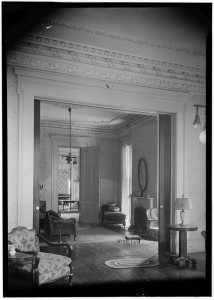
    094144pv_Belmont Interior

    1936 HABS Interior Photograph, Library of Congress

  • The Weathers family soon acquired the house and owned it until the mid-1940s.
  • In 1946, Belmont became the home of the Belmont Hunting Club. 
  • Most of the changes to Belmont in the upstairs and in the north parlor took place in the 1990s during the ownership of Fernando Cuquet, Jr.
  • Added to the National Register in 1972, Clinton Bagley’s nomination text is the best source of history on Belmont.
Fact sheet created November 2015 by Blake Wintory of the Lakeport Plantation, an Arkansas State University Heritage Site — lakeport.astate.edu. Updated 05/04/2016
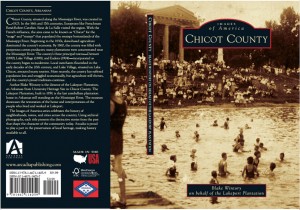

Images Of Chicot County Published

RE Cover Approval Needed ASAP CRM00321976 - lakeport.ar@gmail.com - Gmail - Google Chrome 4292015 91005 PM.bmp Written by Lakeport Plantation director Dr. Blake Wintory and published by Arcadia Publishing, Images of Chicot County tells the story of the county through vintage photos. The book includes chapters on the county’s three principle towns (Dermott, Lake Village, and Eudora) as well as chapters on the county’s early years, Lake Chicot, and rural life. The book begins with an 1823 sketch of Point Chicot, the county’s first seat, and also includes several images of the plantations houses–now mostly gone. Gracing the cover of the book is an image of the Lake Village Water Carnival, the signature event for the county in the 1920s. Proceeds benefit the Lakeport Plantation, an Arkansas State University Heritage Site
 

Book Signing for Images of Chicot County

The Images of Chicot County book is now officially published. The book retails for $21.99 +tax and is available locally at Lakeport, Hunters Pharmacy, South Shore Cottages, Lake Village True Value Hardware, Dee’s Treasure Chest or any online retailer–Arcadia Publishing, Barnes & Noble, Amazon…The Washington County Economic Alliance will host a signing and Business After Hours at Lakeport on Thursday, September 3rd from 5 pm – 7 pm. To purchase a book, please bring cash for check for $24.

Book Signings with author, September 2015:

Lakeport Plantation
Thursday, September 3
5 pm – 7 pm

Paul Michael Company (Lake Village)
Saturday, September 5
5 pm – 7 pm

Lake Village Chamber of Commerce Monthly Meeting
Place: Lake Village County Club
Thursday, September 17
Noon – 1 pm

Lake Chicot State Park
Saturday, September 26
10 am – Noon


Lakeport Legacies · August 27 · Delta Modern · Jennifer Baughn

Delta Modern

presented by

Jennifer Baughn, Mississippi Department of Archives & History

Thursday, August 27

Refreshments & Conversation @ 5:30 pm
Program @ 6:00 pm

The "modernistic" Sunflower Grocery, designed by Harold Kaplan, opened in 1959 in Greenville.

The “modernistic” Sunflower Grocery, designed by Harold Kaplan, opened in 1959 in Greenville.

IMG_9506

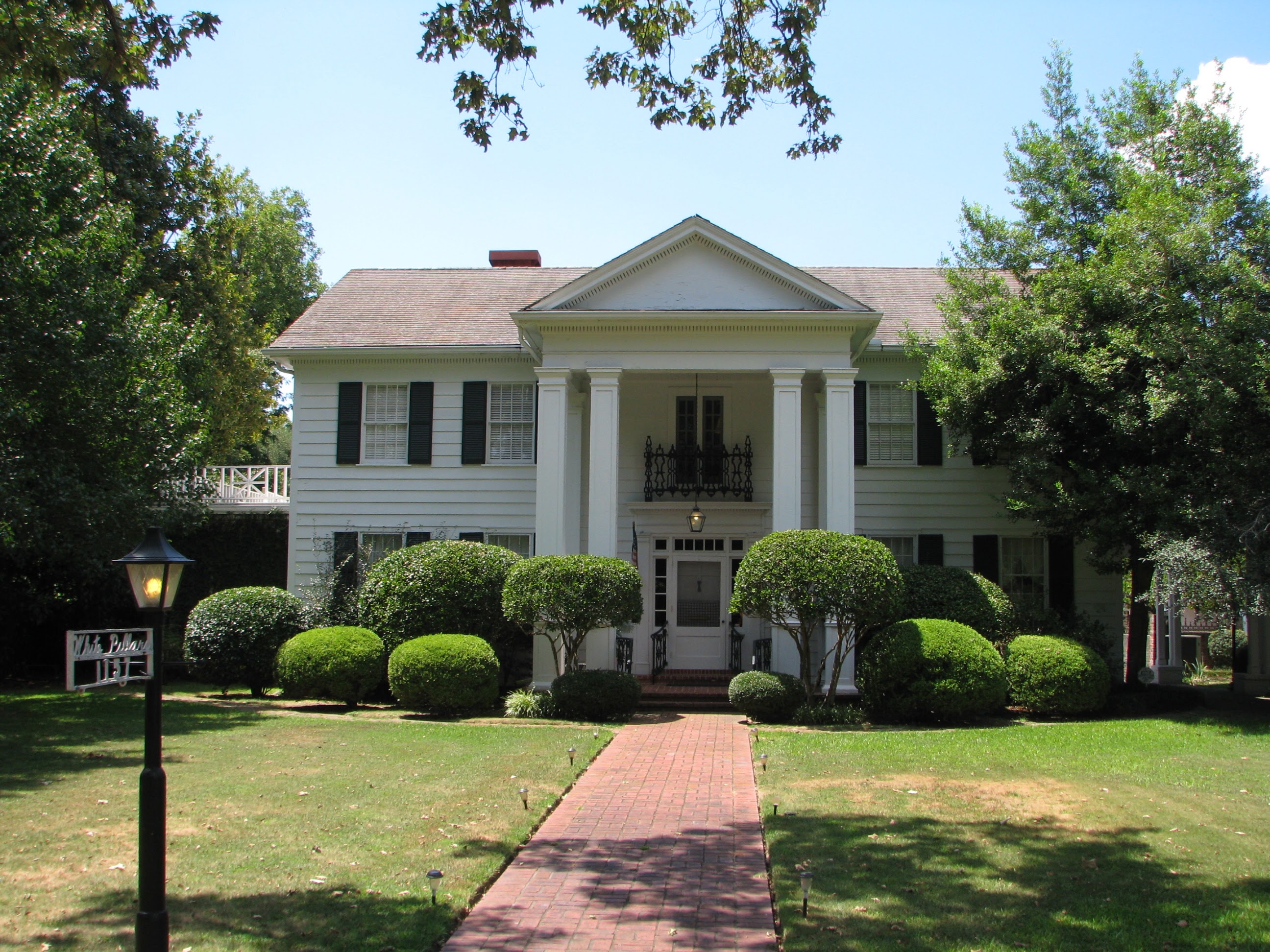
“White Pillars” is a Neoclassical Colonial home designed in 1948 for the Nash family by Harold Kaplan. The traditional architecture is in contrast to many of Kaplan’s Modernist public architecture.

Lakeport Plantation’s monthly history talk, Lakeport Legacies, will feature Jennifer Baughn, chief architectural historian at the Mississippi Department of Archives & History. Mrs. Baughn, in her talk titled, “Delta Modern,” will discuss Mid-Century architecture (1930s-1960s) in the Mississippi Delta. At Mid-Century, traditional and modern styles were competing architectural visions. In the Delta, the period is exemplified by two architects: Leland native Harold Kaplan and Jackson’s N. W. Overstrett. Kaplan’s Modern designs for public buildings, like T. L. Weston High School (1954), are a contrast to his designs for traditional Colonial private homes, like White Pillars (1948) in Greenville’s Gamyn Park neighborhood. Drawing from examples across the Delta, Baughn will discuss the region’s most interesting Modern architecture such as Greenville’s Coleman High School and Delta State’s Young-Mauldin Cafeteria. Exemplifying the optimism and booming economy of the decades after World War II, Mississippi’s Modernist architecture is gaining the appreciation of both historians and architecture buffs for its clean lines, functional planning, and futuristic detailing.

Please RSVP to this FREE Event
870.265.6031

Lakeport Legacies (LL) meets in the Dining Room of the Lakeport Plantation house. LL, held on one of the last Thursdays of the month at the Lakeport Plantation, features a history topic from the Delta. For more information, call 870.265.6031.


Lakeport Legacies — Annie Read Reeves’ Chicot County Civil War Diary, 1861-1863

Annie Read Reeves’ Chicot County Civil War Diary, 1861-1863

presented by

Dr. Blake Wintory, Lakeport Plantation

Thursday, July 30

Refreshments & Conversation @ 5:30 pm
Program @ 6:00 pm

Map_crop_owens_filter

The Rossmere Plantation, founded in 1847 by George Read IV, was located on the east side of Lake Chicot south of Stuart’s Island. In 1861, the plantation had over 1300 acres and 61 slaves. One of those slaves, Lucretia Alexander, was interviewed by the WPA in the 1930s.

Annie Read Reeves, a widow with four children, left New Castle, Delaware in October 1861 during the first year of the Civil War. They arrived at the Rossmere Plantation on Old River Lake in Chicot County on November 22. Annie and her brother George Read IV (1812-1859) were the great-grandchildren of George Read I, a signer of the Declaration of Independence. Her late brother founded Rossmere in 1846 and her sister-in-law, Susan (Chapman) Read, still resided there in 1861. Reeves’ diary (1861-1863) details her trip to Chicot County and experiences during the Civil War. Wintory will discuss the diary and what we know about the Read family and plantation from other sources: deeds, tax records, Susan Read’s letters, a memoir by Annie’s daughter, and a slave narrative.

Please RSVP to this FREE Event
870.265.6031

Lakeport Legacies (LL) meets in the Dining Room of the Lakeport Plantation house. LL, held on one of the last Thursdays of the month at the Lakeport Plantation, features a history topic from the Delta. For more information, call 870.265.6031.


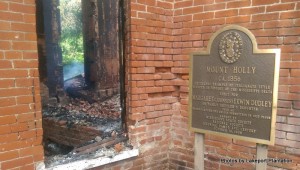
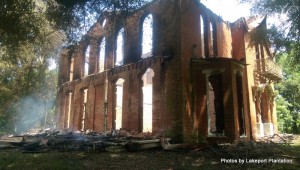
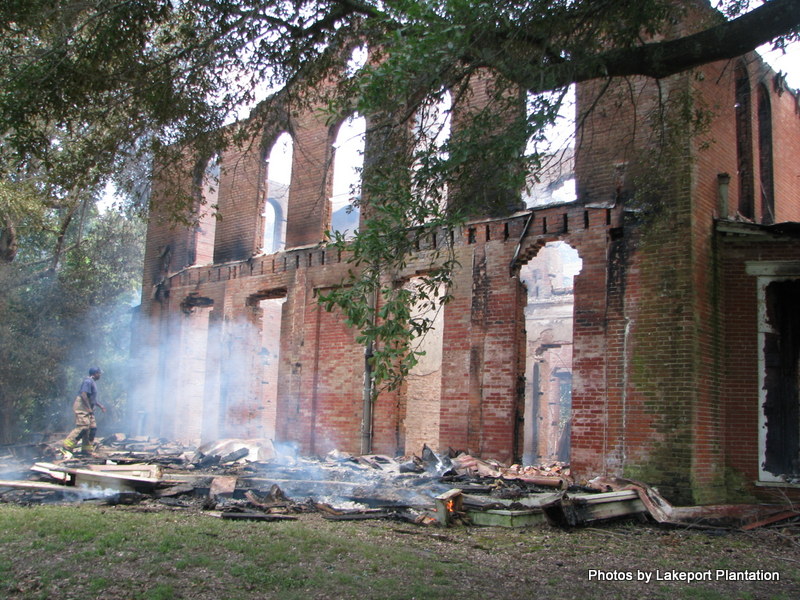
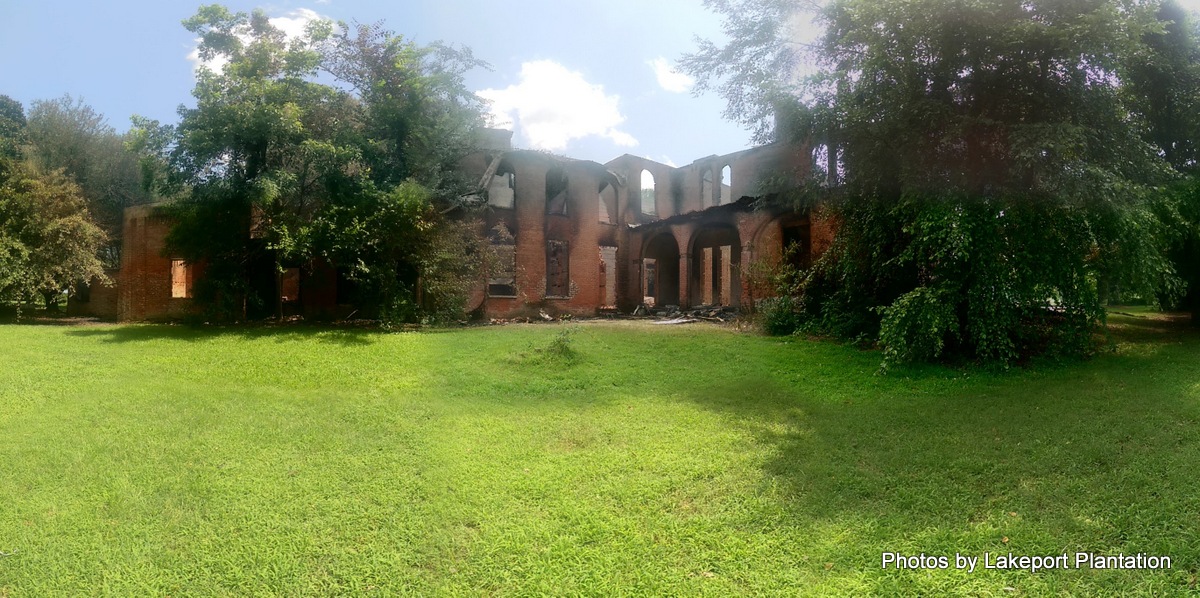
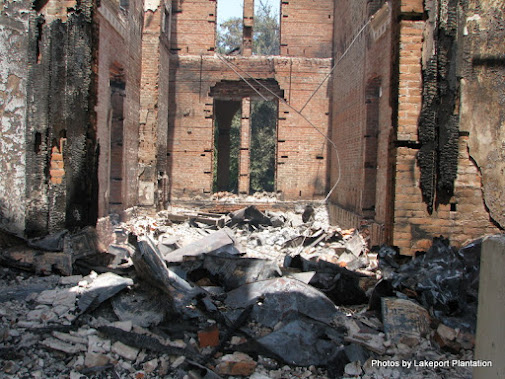
Mount Holly burns

Mount Holly burned early in the morning on June 17, 2015. Mount Holly was constructed ca. 1856 for Margaret (Johnson) Erwin Dudley after purchasing the land from her father in 1855. The grand Italianate home was most likely built based on plans by Calvert Vaux first published in Harper’s in November 1855 and later in Vaux’s Villas and Cottages (1857). In the 1880s, William Hezekiah Foote became Mount Holly’s owner. His great-grandson, Shelby Foote, used Mount Holly as the setting for his first novel, Tournament, published in 1949. Foote told the Clarion-Ledger in 1973 “the house was erected by a transient architect in 1855, working from plans carried with him and with the assistance of one man who accompanied him and a construction crew of slaves from the Mount Holly plantation.” Mount Holly was similar to two other Italianate Mississippi houses, Aldemar, built for Victor Flournoy ca. 1859 on Lake Washington; and Ammadelle, built 1859, in Oxford. Ammadelle still stands.

At Lakeport, despite the differences in architectural styles, we often tell guests about how Lycurgus’s cousin’s house influenced Lakeport’s design–layout of the parlors and entryway, main staircase in a cross hall, the peculiar arch upstairs probably influenced by Mount Holly, attached kitchen, cast-iron stove set in brick, servants bells, brick walkway…….


Mount Holly, June 17, 2015

IMAG5895IMAG5887


PANO_20150617_142958

More Pictures from June 17, 2015 

Mississippi Preservation Blog: Sad News from Lake Washington

Mississippi Historic Resources Inventory: Mount Holly

Bagley, Clinton. “Mount Holly,” National Register Nomination Form, August 1973.

Carl McIntire, “More on Mt. Holly,” Clarion Ledger, February 18, 1973

Erwin House [Mount Holly], Historic American Building Survey, Library of Congress, 1936.


Updated June 17, 2016


LAKEPORT LEGACIES — Absentee Masters of the Mississippi River

Absentee Masters of the Mississippi River

presented by

Dr. Kelly Houston Jones, Austin Peay State University
Thursday, June 25

Refreshments & Conversation @ 5:30 pm
Program @ 6:00 pm
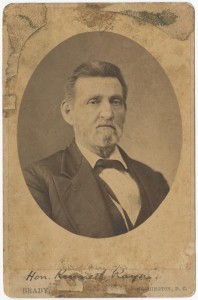
Kenneth Rayner

Kenneth Rayner, a resident of North Carolina, purchased a 538 acre Chicot County plantation in 1845. Writing to a friend, he objected to the land being “in the state of Arkansas” and complained “I will never leave my wife so long again.” Two years later, visiting the plantation during the December harvest, he praised his overseer, “I think my overseer a first rate manager…he has, picked, and packed about 220 bales of cotton” despite bad weather. (Image by Matthew Brady; courtesy of East Carolina Manuscript Collection.)

Many masters along the Mississippi River did not reside on their plantations. Instead they relied on overseers to run the day-to-day operations. The absence of a white family in the “big house” could make the plantation a much different place than one with an owner-resident. Dr. Kelly Houston Jones will discuss her work on R.C. Ballard and other area plantation owners who resided away from their holdings, and what those arrangements would have meant for enslaved people living on those plantations.

Please RSVP to this FREE Event
870.265.6031

Lakeport Legacies (LL) meets in the Dining Room of the Lakeport Plantation house. LL, held on one of the last Thursdays of the month at the Lakeport Plantation, features a history topic from the Delta. For more information, call 870.265.6031.


LAKEPORT LEGACIES — Ancestral Activity: Doing African American Genealogy in Arkansas & Chicot County

Ancestral Activity: Doing African American Genealogy in Arkansas & Chicot County

presented by

Rhonda Stewart, Butler Center for Arkansas Studies

Thursday, May 28

Refreshments & Conversation @ 5:30 pm

Program @ 6:00 pm

Rhonda - 3rd grade

Ms. Stewart, pictured here in the 3rd grade, became interested in her own family’s history after hearing her grandmother’s stories about her great-grandmother.

 Rhonda Stewart, a genealogy and history specialist at the Butler Center for Arkansas Studies, will discuss how to research African American family history in Arkansas. Oral histories are excellent places to start building a family history and can be confirmed with local history resources and genealogy databases available on Ancestry.com and other websites. Part of Ms. Stewart’s presentation will focus on two examples of family history in Chicot County. The Butler Center is a department of the Central Arkansas Library System in Little Rock.

Please RSVP to this FREE Event
870.265.6031

Lakeport Legacies (LL) meets in the Dining Room of the Lakeport Plantation house. LL, held on one of the last Thursdays of the month at the Lakeport Plantation, features a history topic from the Delta. For more information, call 870.265.6031.


Summer Hours 2015 — SATURDAY HOURS ADDED

In addition to Lakeport’s regular weekday tours, Lakeport will add Saturday hours (11 am – 3 pm) from May 23 until July 26.*

Summer Hours 2015
May 23 – July 25
Mon-Friday Tours at 10 am & 2 pm
Open Saturdays* to visitors 11 am – 3 pm
Closed Sundays
Closed Memorial Day, Monday, May 25
*Closed Independence Day, Friday, July 3** & Saturday, July 4
**Change of plans. We will be open Friday, July 3, 2015


Lakeport Plantation is open year round; summer hours add extra Saturday tours to our regular Monday through Friday schedule.


Lakeport Legacies — Images and History of Chicot County: Book Project Update

Images and History of Chicot County: Book Project Update

presented by
Dr. Blake Wintory, Lakeport Plantation

Thursday, April 30, 2015

Refreshments & Conversation @ 5:30 pm

 Program @ 6:00 pm

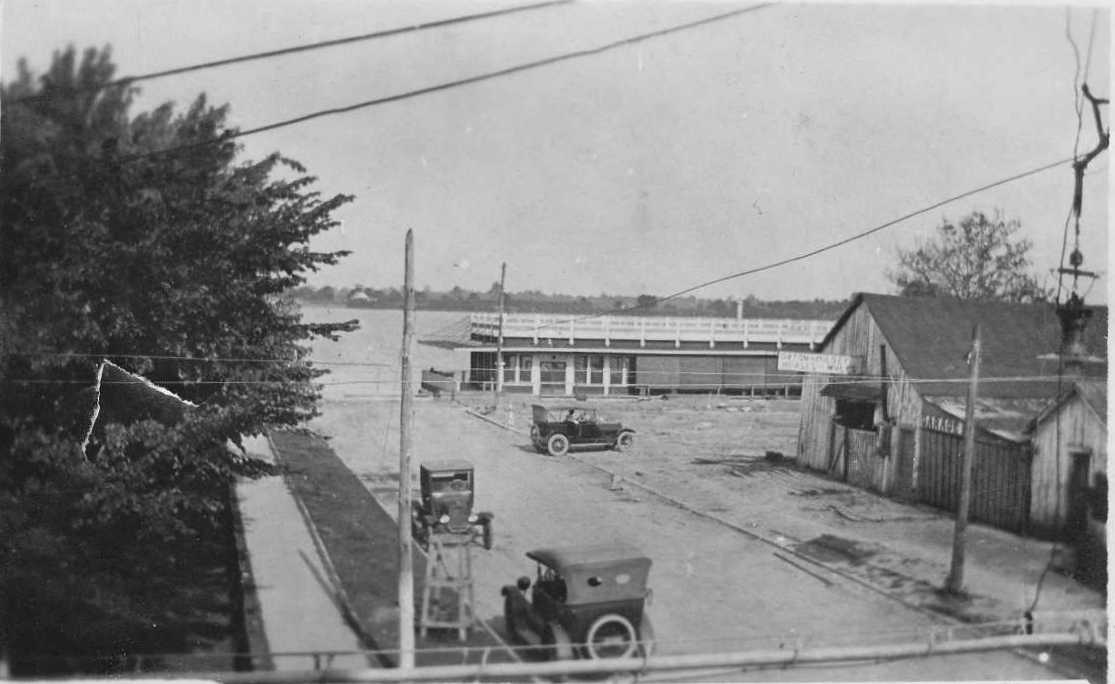
downtown_lake_village_ca 1920_session_coll_lakeport2

Lake Village’s downtown and lakefront around 1920, probably taken from second floor of the Tushek Building. Visible are Gaines Cafeteria along Lake Chicot and Watt Orton’s Livery Stable. (Bill and Jeanine Session Collection, Lakeport Plantation)

Lakeport Plantation is nearly finished with a pictorial history of Chicot County with Arcadia Publishing. During the past year of research, we have made some interesting discoveries, including the photograph above of downtown Lake Village. Come see, learn or share a memory about Chicot County’s history.

Please RSVP to this FREE Event
870.265.6031

Lakeport Legacies (LL) meets in the Dining Room of the Lakeport Plantation house. LL, held on one of the last Thursdays of the month at the Lakeport Plantation, features a history topic from the Delta. For more information, call 870.265.6031.


2015 Lakeport Legacies Schedule

March 19 · Doc Hollywood: The Archaeology of Health and Healing at Hollywood Plantation · Dr. Jodi Barnes (Arkansas Archeological Survey)

April 30 · Images and History of Chicot County: Book Project Update · Dr. Blake Wintory (Lakeport Plantation)

May 28 · Ancestral Activity: Doing African American Genealogy in Arkansas & Chicot County · Rhonda Stewart (Butler Center, Central Arkansas Library System)

June 25 · Absentee Masters of the Mississippi River · Dr. Kelly Jones (Austin Peay University)

July 30 · Annie Read Reeves’ Chicot County Civil War Diary, 1861-1863 · Dr. Blake Wintory (Lakeport Plantation)

August 27 · Delta Modern (Architecture) · Jennifer Baughn (Mississippi Department of Archives and History)


Lakeport Legacies is a monthly history talk held at the Lakeport Plantation focusing on history in the Delta.  Lakeport Legacies meets on one of the last Thursdays of the spring and summer months at 5:30 p.m. with the program starting at 6:00 p.m. All events are free and open to the public. Guests are asked to RSVP. The Lakeport Plantation is located at 601 Hwy 142, Lake Village, Arkansas. For more information call 870.265.6031 or visit https://lakeport.astate.edu.