News

Large Cistern Repaired

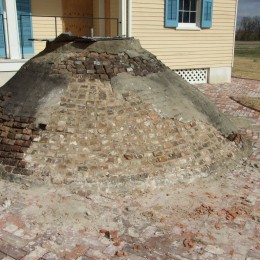
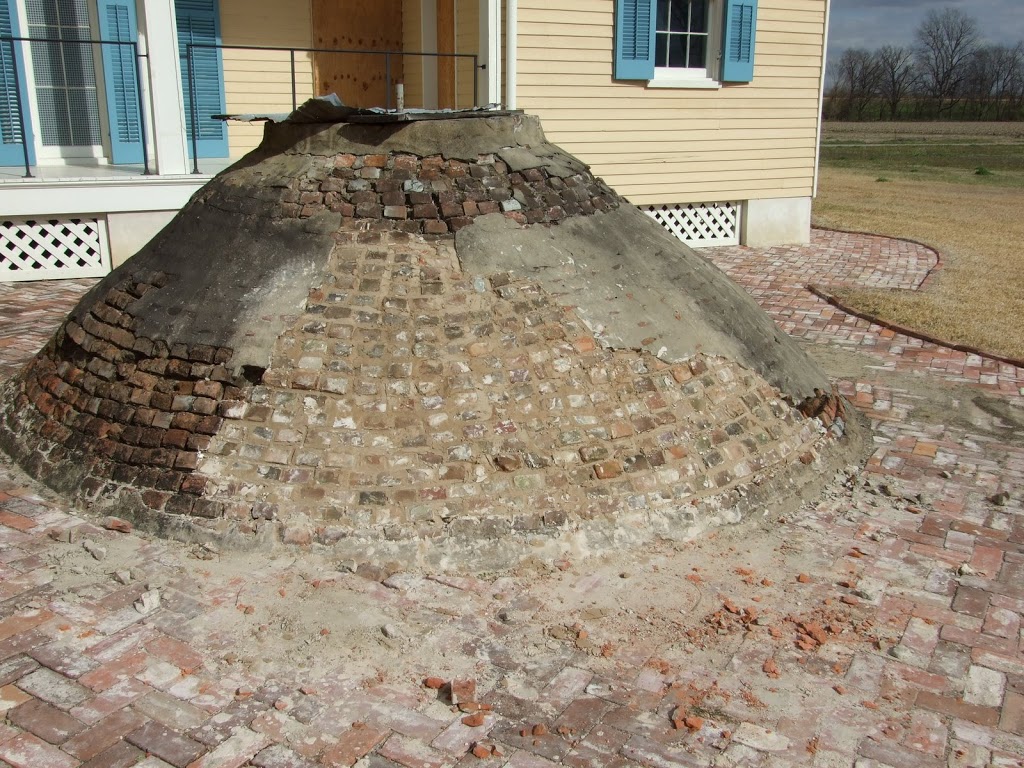
The large hole in the large cistern has been patched!  

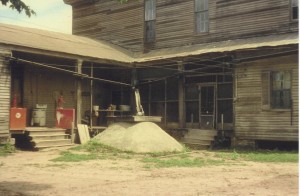
The large cistern, which sits along the ell porch, had a large hole in its side for many years; a photo from ca. 1956 shows the cistern intact.

  The hole was likely created by trucks that backed 
up to deliver goods to the commissary, which was in use as late as 1984.   
The large cistern is one of two cisterns at Lakeport Plantation.  They were part of the original water collection system that directed water away from 
the house and collected water for domestic use.
Rain water was captured by the built-in/box gutters on the second story of the house and half-round gutters found along the ell porch.  The water was then directed by downspouts into brick collection boxes in the brick walkway.  The water was strained and then flowed into underground troughs that originally fed into the cisterns.  Today, rainwater is directed into several collection boxes in the yard and the cisterns have been filled with sand for safety.  Uses for the water in the cisterns would have included washing, cooking, cleaning, and drinking.
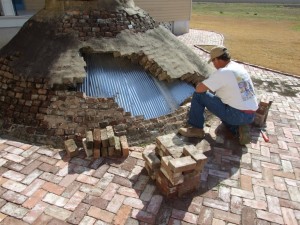
To repair the cistern, a form had to be fashioned to hold the bricks in place 

as the mortar set.  
A local carpenter, Keith Carpenter (his real name), decided to use sheet metal as the form–though not what would have been used in the 19th century, it does the job using the same principle.  
Once the form was in place, Lester Davidson, a mason who has worked at Lakeport before, was able to patch the hole using bricks left over from the restoration and a mortar created from lime putty and local river sand. 
Click on the slideshow below to see more pictures of the work on the cistern and shots of the guttering system as well. 


Lakeport Featured on AETN’s Exploring Arkansas

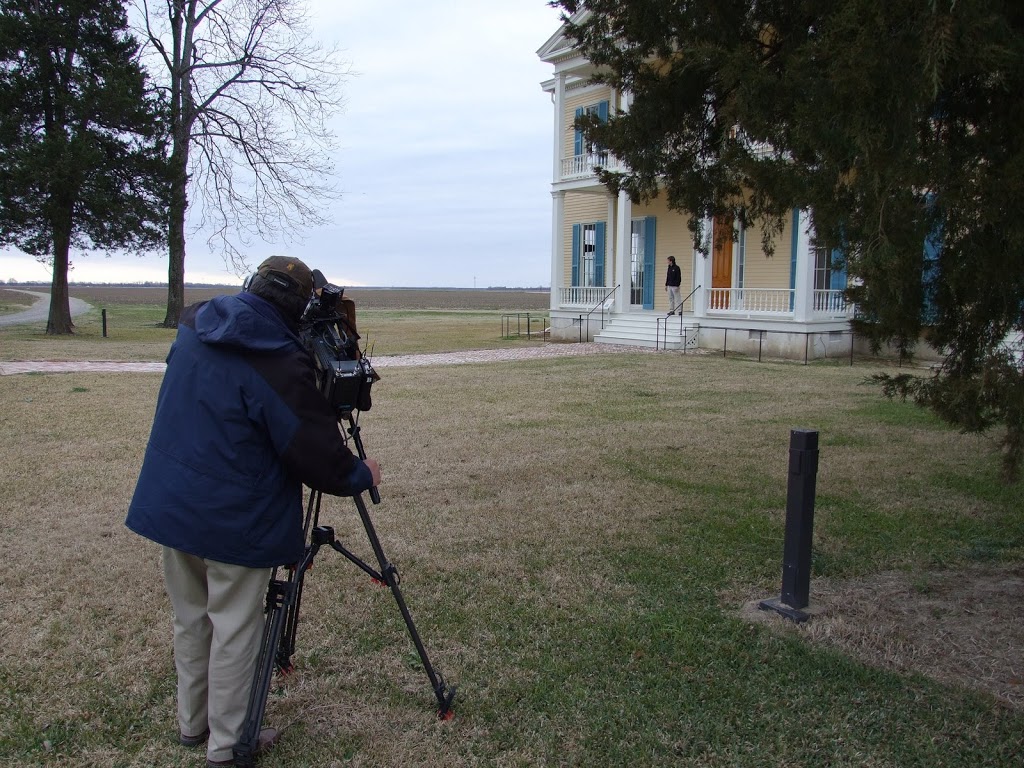
Exporing Arkansas, a National Geographicesque program on The Arkansas Educational Televsion Network, featured Lakeport Plantation last week. Program host Chuck Dovish visted Lakeport during a cold spell in mid-January.  The program aired twice (March 2 and 8), but you can still see the ~6 minute segment on YouTube


Archeology Week at Lakeport

During the week of February 16 to 20, archeologists from the Arkansas Archeological Survey and the Lakeport Restoration Team members flocked to Lakeport to try to answer burning historical questions about the antebellum layout of the plantation. Skip Stewart-Abernathy, a survey archeologist stationed at the Winthrop Rockefeller Institute atop Mt. Petit Jean, led the project. Dr. Stewart-Abernathy, who first visited Lakeport in 1984, specializes in historic archeology.

Lycurgus Johnson constructed Lakeport ca. 1859, just at the end of the antebellum period. Lycurgus built his house just north of Joel Johnson’s house—his father. Joel Johnson arrived at that location in 1831 with 23 slaves. By 1860, Lycurgus, after consolidating his father’s holdings with his own. had over 4,000 acres of land and 155 slaves.

An antebellum cotton plantation like the Johnson’s is typically centralized with enslaved labor (i.e. slaves) occupying the “quarters” and the master occupying the “Big House.” The master employed an overseer who supervised gangs of labor who worked to grow and then pick cotton. A post-Civil War plantation looks a lot different. Land ownership usually didn’t change (as was the case with Lakeport), but labor arrangements to grow cotton did change dramatically. Now free, the labor that once grew and picked cotton in gang labor transitioned into family units of tenant farmers and sharecroppers. These families, in a contract with the owner, farmed and lived on smaller sections of land.

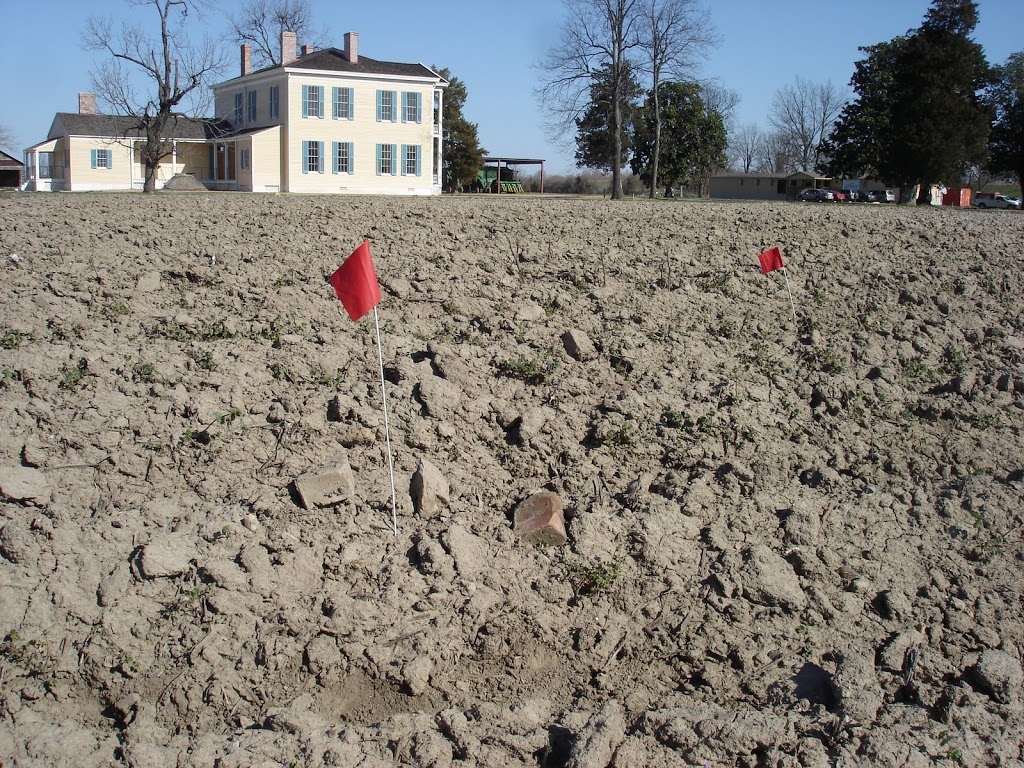
On this archeological “dig,” no digging was necessary. All the land around the house is still in cultivation and had been recently plowed, giving high visibility. Crews walked the furrows looking for significant artifacts—bits of dishes, marbles, bottles, agricultural parts, etc.—all of which can be dated. Artifacts collected during the “dig” have been labeled, numbered and cataloged and will remain in the permanent collection at Lakeport Plantation. Most artifacts around the plantation dated to after the Civil War and usually represented the former tenant farmer homes that dotted the land after the Civil War until mechanization; however almost all of the antebellum artifacts, were found south of the Lakeport home around where Joel Johnson began building his plantation out of the wilderness in 1831. This leads us to believe that Lycugus kept the location of his father’s “quarters.”

This week of archeology is part of the on-going research at Lakeport Plantation and helps fulfill the mission of interpreting the people and cultures that shaped plantation life in the Mississippi River Delta during the Antebellum, Civil War, and Reconstruction periods.  We’re open Monday thru Friday with tours at 10am and 2pm.  Visit our website for directions.

Posted by Picasa